Your Sauna Stove Is Chosen by the Site, Not the Steam
Nothing spoils a tidy sauna roof faster than a flue decided after the drawings were signed. The pipe lands on a rafter. The clearance zone eats the bench you wanted. Someone starts negotiating with the roof structure at eight in the morning. Whether the cabin gets an electric heater or a wood-burning sauna stove is not an accessory choice made at the end of the job: it fixes the chimney or the cable route, the bench layout, the ventilation openings and a real slice of the installation budget.
Our position is blunt. The site decides this far more often than taste does. Steam preference breaks the tie, it does not open the argument. We build cabins, not the stoves that go inside them, so we have nothing riding on which one you pick.
What the plot can actually feed
Start with what the plot can deliver. An electric heater sized for a family cabin needs a dedicated circuit, and larger outputs commonly call for a three-phase supply. Where that line falls depends on the heater rating, the incoming supply and national wiring rules, and the work belongs to a qualified electrician either way. Where the sauna sits at the bottom of a garden, or on a plot with no connection yet, that means a trench, a cable, a dedicated breaker in the distribution board, and sometimes an upgrade at the meter.
A wood-burning stove wants the opposite kind of infrastructure:
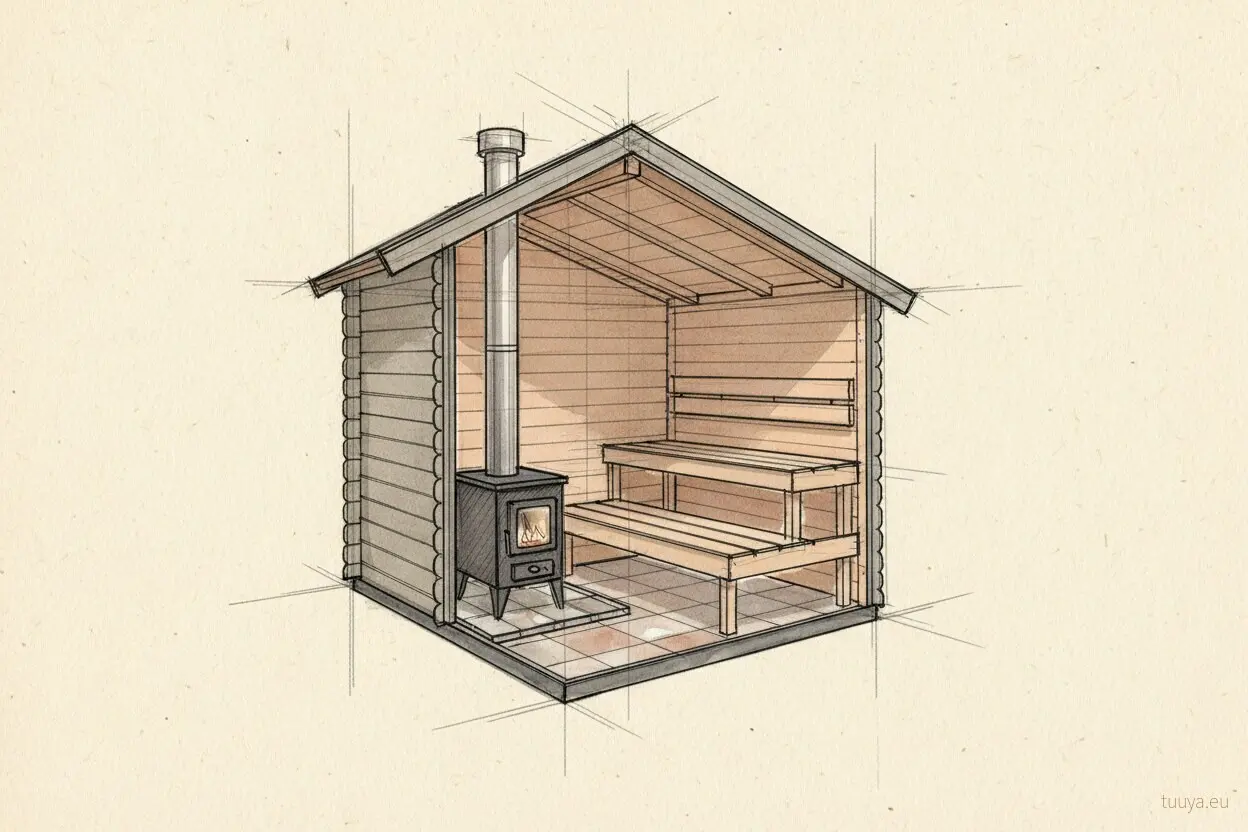
- a flue route that can pass through the structure safely, from firebox to above the ridge;
- the clearances to combustible surfaces stated in the stove documentation;
- protected floor under and in front of the firebox;
- sweeping access that still works once the cabin is finished and furnished.
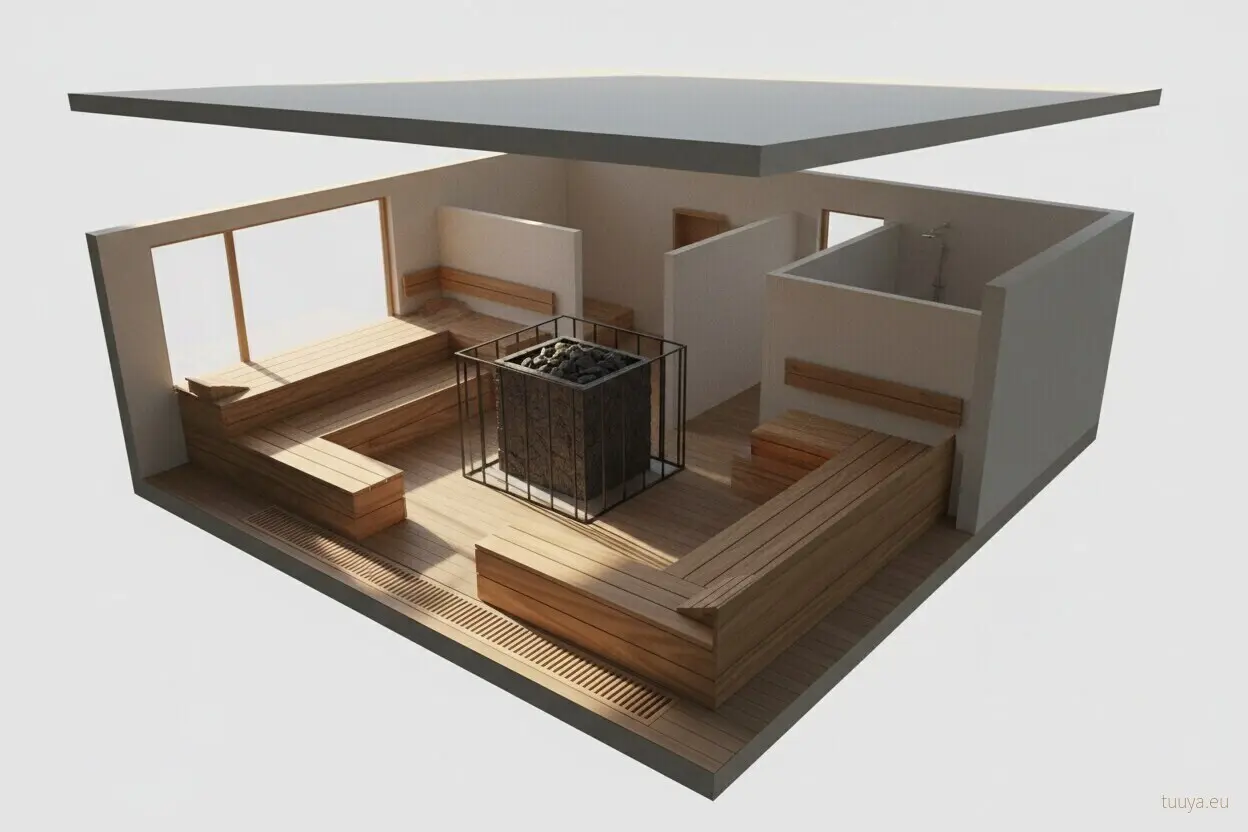
In solid timber saunas the envelope itself is combustible wood, so the penetration detail and the clearances follow the stove documentation and local fire rules, not whatever looks neatest on the plan.
Off-grid settles the question in one move. For a typical small cabin in a forest or by a lake with no mains power, wood is the practical answer: a modest photovoltaic array will run lights and a water pump long before it runs a heater element. Inside a house or an apartment building the logic reverses. The flue route may be impractical, or simply not permitted, and electric becomes the only realistic option.
How often you bathe, and whether you are willing to wait
The real advantage of an electric heater is that the heat starts without you in the room. Where the unit has a timer or remote start, the cabin is at bathing temperature when you arrive, and a short weekday session stops being a project. Heat-up time still depends on output, cabin volume and insulation, but it is short enough that a timer can carry it.
A wood fire takes longer and wants attention. Kindling, a first load, a top-up, a look at the stones. That last part cannot be automated by anything.
Two households, same product category, opposite answers. One bathes twice a week after work in a sauna attached to the house, where the automation is the entire point. The other uses a cabin by water on long weekends, where lighting the fire is part of the afternoon rather than an obstacle to it.
Stone mass, and why the loyly feels different
Preference for wood heat comes up constantly among people who bathe often, and the reasons are physical rather than mystical. A wood stove carries a larger mass of stones and a hot metal body, which gives a stronger radiant component and a stone bed that keeps producing steam through several ladles of water.
Electric heaters vary widely on exactly this point. A slim wall-mounted unit with a thin layer of stones behaves nothing like a heavy floor-standing model with a deep stone basket, and the second closes much of the gap. If the quality of the loyly matters to you, compare stone capacity and heater mass before you compare fuels.
The cabin does as much work as the heater
Bench height relative to the stones, cabin volume, how well the lining fits, the ventilation scheme, the insulation: all of it shapes how the steam feels on skin. A tight, well-lined cabin behaves steadily. A draughty one with cold surfaces feels harsh whatever is heating it. The moisture load in a sauna is high, so the lining normally sits in front of a vapour-tight layer, and the same reasoning that decides where the vapour control layer sits in a warm build-up applies here too, checked against the whole assembly and the local climate rather than copied off another project.
The chimney and combustion air a wood sauna stove needs
Both heaters need a working ventilation scheme. A wood stove needs combustion air on top of it. The fire pulls air out of the room continuously, so a dedicated supply of make-up air, either a duct to the stove or a designed inlet beside it, keeps the fire drawing and keeps the room from going stale. The ventilation layout in the heater documentation is written for that specific appliance, and it is the one to follow.
Electric saunas are simpler, not exempt. Air in low near the heater, out away from it, so heat circulates across the benches instead of sitting under the ceiling, and so the timber dries out between sessions.
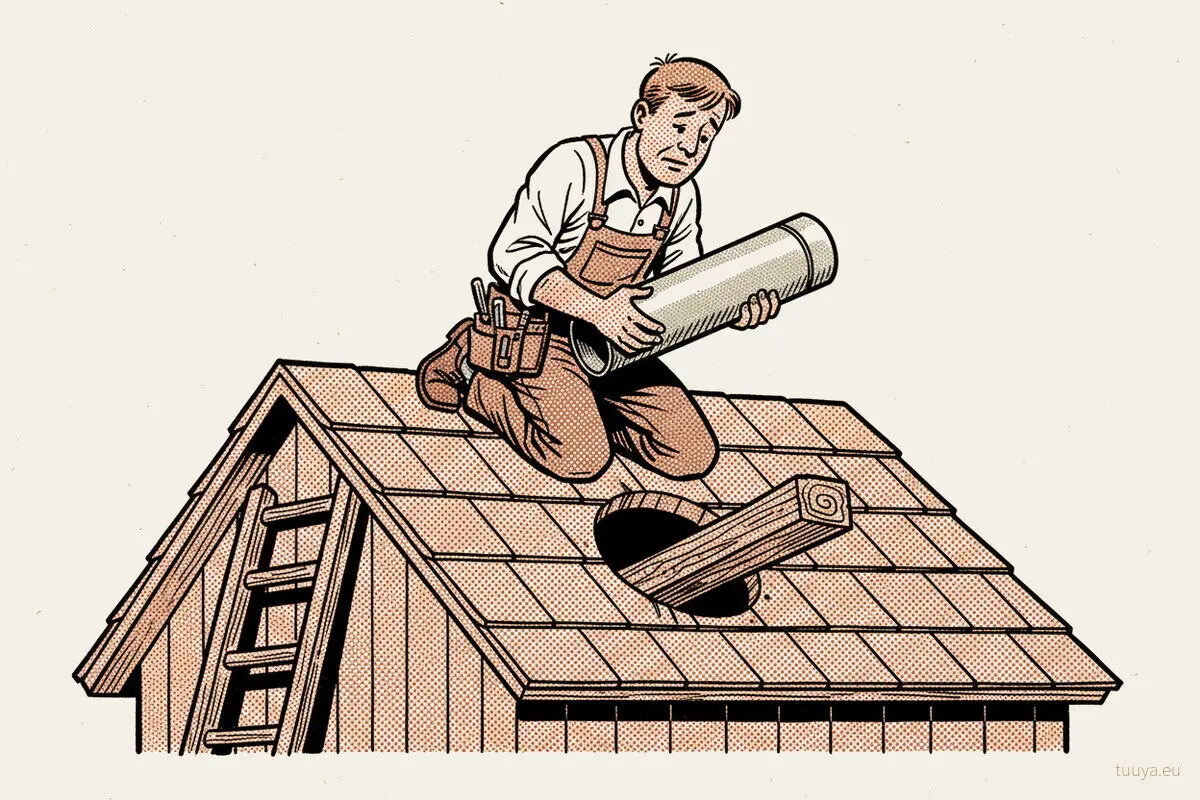
The chimney is the part people underestimate. The flue system specified for that stove, insulated where it passes through the structure. A fire-safe penetration through a timber roof, with a rain collar above it. Sweeping access, and a spark arrestor where local rules or the chimney specification call for one. That is a package rather than a part, and depending on the country it may need inspection or sign-off before first use. Price it as a package, not as a length of pipe.
What each criterion decides
| Factor | Why it matters | What settles it in your project |
|---|---|---|
| Electrical supply | An electric heater is only as good as the circuit feeding it | Heater rating, distance to the board, and what the incoming supply allows |
| Flue route | A wood stove is possible only where a chimney can pass through the structure safely | Roof geometry, clearances in the stove documentation, local fire rules |
| Use pattern | Decides whether timers and remote start are worth paying for | How often, and how spontaneously, the sauna will be used |
| Fuel logistics | Wood has to be bought or cut, seasoned, stored dry and carried | Whether you have wood, covered storage and appetite for handling it |
| Attendance | A fire needs a person; an element does not | Who bathes, and whether sessions are supervised |
| Approvals | Solid fuel appliances bring inspection and documentation with them | National fire and chimney rules, plus any building or estate restrictions |
What it costs to run, and who does the work
Running cost splits into energy and labour, and only one of the two ever appears on a bill. An electric sauna's cost follows heater output, session length and your tariff, which differs across Europe and moves year to year, so the only number worth having is the one you work out from your own kilowatt-hour price. Wood can be close to free if you cut and season your own, or comparable to electricity if you buy it by the crate.
Labour is the honest difference between them. Splitting, stacking, carrying, lighting, clearing ash, sweeping: recreation to some people, a chore to others, and it helps to know which you are before you order. Electric asks almost none of that, with element and control replacement as the eventual maintenance.
Installation is where the two genuinely diverge, and it is worth pinning down in writing before you commit. The flue, the hearth protection, the ventilation ducts and the electrical connection sit exactly at the boundary of a supplier's responsibility, so read them the way you would read any line at the edge of a timber house quote.
Electric is not the compromise it sounds like
Electric drops the chimney, the hearth protection and the sweeping access out of the job, which leaves the cable and the board. For plenty of projects that is not just the cheaper route, it is the better one. The case for electric is strongest where:
- the sauna is inside a house and a flue would have to cross finished floors and roof;
- you bathe often and briefly, on impulse, on a weekday evening;
- the plot already has adequate power in roughly the right place;
- building or estate rules restrict solid fuel appliances;
- the cabin will be used by guests who cannot be expected to manage a fire.
Choosing electric because it costs less is no compromise at all when the use pattern matches it. The commoner mistake runs the other way: a wood stove bought for the romance of it, followed by an hour of fire-tending in the rain by whoever gets home first, every single time.
The verdict
If the plot takes a safe flue route and you bathe in long, unhurried sessions, a wood-burning sauna stove earns both its installation cost and its chores. The heat is the kind regular bathers keep coming back for, and the ritual is half the reason you are building. If the sauna is indoors, used on impulse, or shared with people who will not tend a fire, an electric heater with a generous stone volume is the better machine for that job, and nobody should feel short-changed by it. Either way, decide before the cabin is manufactured. The roof penetration, the guard, the bench positions and the vent openings all follow from the answer.
Questions that come up before ordering
Can I add a wood-burning sauna stove later if I fit an electric heater now?
Yes, if the cabin is prepared for it from the start. Reserve the flue route, keep the clearance zone free of benches and fittings, and specify the roof penetration and floor protection at manufacture; the swap then becomes a manageable change. Cutting a new chimney through a finished roof and lining is possible, but it is the expensive way round.
Can a wood stove be loaded from outside the hot room?
That is what a through-wall firebox extension is for: the stove sits in the sauna, the loading door opens into the changing room or the outside air. Wood, ash and cold draughts stay out of the bathing space. It brings its own detail to solve, since the extension passes through the cabin wall and needs clearances and protection on both sides of it.
Does a wood-fired sauna stay warm longer after the session?
It holds heat longer for a physical reason: the stove body and a larger stone mass keep releasing heat after the fire dies down. How long the cabin itself stays warm depends on insulation, the tightness of the lining and whether the vents are closed, not on the fuel. An electric cabin cools once the elements stop, unless it has a heavy stone bed to draw from.