DIY Sauna Cost: You Save on Materials, Not on Detailing
The material list for a small sauna is the cheap part of building one. Your hours, the tools you buy once, and three or four decisions around the stove, the lining and the air path are where the money actually goes. That is why DIY sauna cost is the wrong figure to compare on its own.
Our position, and we manufacture sauna kits, so weigh it accordingly: build it yourself if the skill and the time are genuinely there and you want the work. Buy a kit if what you are really buying is the detailing, settled by someone who has built that cabin before.
A kit is a different product from a pile of materials. Components cut to a drawing, a fixed internal geometry, an assembly sequence the supplier can describe because the cabin has been put together before. The saunas we manufacture in Latvia leave the works as complete cabins, not as a shopping list.
What your own hours are actually worth
Your own labour is the biggest line in a self-built sauna and the easiest one to write down as zero. That is fair when the hours would otherwise have been leisure and you enjoy the work. It stops being fair when the project eats unpaid leave, blocks a paid job, or brings an electrician back twice because the cabin was not ready the first time.
A small hot room is rarely a one-weekend build for a first-timer. The work arrives in a set order, and each stage waits on the previous one being right:
- Setting out and the base.
- The shell, squared up and weathertight.
- Insulation and the moisture layer.
- The air openings, cut before anything covers them.
- Lining, benches and the door.
- The flue penetration or the cable run, then the fit-out.
If your time has a market value, multiply honestly before you compare anything.
Buying materials one cabin at a time
Buying for a single small building means buying badly, through no fault of your own. Cladding and lining come in packs. Insulation comes in bales sized for a wall bigger than yours, membrane in rolls that would cover several cabins, fixings in boxes you will never finish. You pay retail for all of it and then store the remainder in the garage.
Timber quality is the second trap. Lining for a hot room wants a species and a moisture content suited to repeated heating and cooling, and merchant stock varies in how it has been stored. A board that was dry in the yard and damp on delivery moves as it settles once the stove has run a few times, and the movement shows up in the joints.
Delivery is the quiet third line. Four small orders from three suppliers, each with its own charge, adds up to a number nobody writes on the plan at the start.
The tool list you buy once
Tools are a real cost unless you will use them again. The usual list runs to:
- a mitre saw;
- a decent circular saw with a guide;
- a nail gun and a compressor;
- a moisture meter;
- something safe to work off at height.
Bought new for one cabin, that is a line of its own, not a rounding error. Hire looks cheaper until the schedule stretches, because hire charges run on calendar time rather than on the hours you actually work, so a build spread across evenings pays for equipment that sits idle midweek. The workable answers are to own the tools already, borrow them, or design the build so the awkward cuts happen in someone else's workshop.
The detailing where mistakes cost money
Three details decide whether a self-built sauna performs, and all three are cheap on paper and expensive to correct afterwards. We sell kits, not stoves, flues or power tools, so nothing here is pushing you toward a brand.
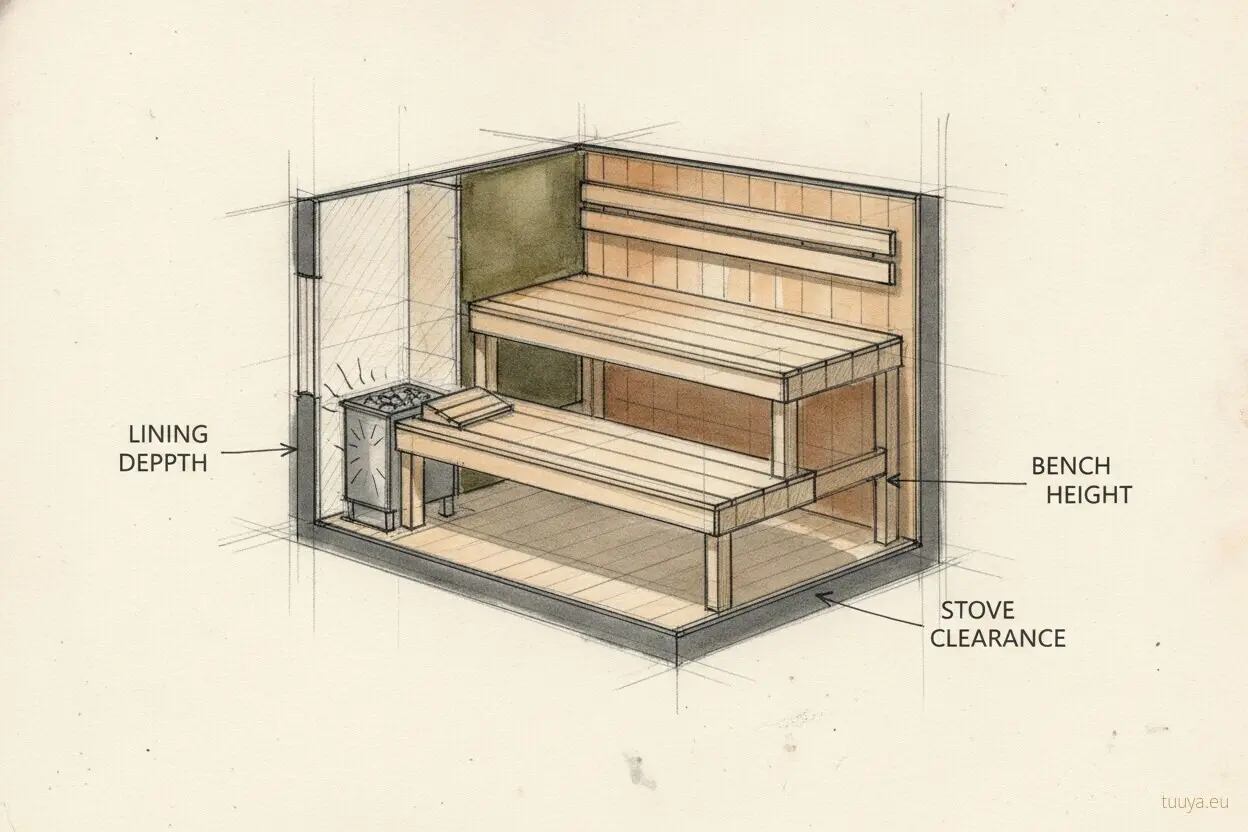
First, the stove and its clearances. These come from the heater manufacturer's instructions and from national fire and chimney rules, which differ between countries and may require inspection or sign-off:
- distances from the unit to combustible surfaces;
- the protection required behind and beneath it;
- the flue route out through the wall or roof;
- how the penetration itself is formed and fire-stopped.
Whether the plot can feed a wood-burner at all, or whether an electric heater is the sensible answer, is a site question long before it is a question of taste. Worth reading which stove the site can actually feed before you set out the benches.
Second, the air path. A hot room heats evenly and clears its moisture afterwards when air can enter low near the stove and leave high on the far side, and how that is arranged depends on the heater and its instructions. Either way the openings belong to the carpentry, not to the fit-out, because they are cut before the lining goes on. The positions are set out in where air has to enter and leave a hot room.
The layers you cannot inspect afterwards
Third, moisture. A hot room produces high vapour pressure in short bursts, so the build-up has to control where that vapour goes and still let the structure dry. In a cold climate the vapour control layer normally sits toward the hot side, behind the lining, but the whole assembly, external build-up and any ventilated cavity included, has to be checked as one thing against the local climate rather than copied off a forum thread.
What makes this the expensive part of DIY sauna cost is not difficulty. It is that the layer disappears the moment the lining goes on, and the symptoms turn up a year or two later as damp timber and dull heat. Putting it right means taking the inside of the cabin apart.
What actually moves each number
No prices here: they move with plot, country and year. What stays stable is the reason each line lands where it does.
| Cost line | Why it matters | What decides the number |
|---|---|---|
| Shell timber and lining | The visible material block and the surface you touch | Cabin size, species and thickness, whether you buy retail packs or cut components |
| Insulation and moisture layer | Hidden after lining; correction means stripping the room | Build-up chosen, cabin size, climate and moisture load checked as one assembly |
| Stove, flue and clearances | Safety critical, and it fixes the internal layout | Heater type and output for the cabin volume, flue route, manufacturer clearances, local rules |
| Electrical work | Regulated work under national rules | Heater or lighting load, cable run from the house, local certification requirements |
| Base and drainage | Carries the cabin and lets the floor zone dry | Plot conditions, cabin weight and how the load is spread onto the ground |
| Your own hours | The biggest line and the one left off the sheet | Skill level, how much you subcontract, whether the hours displace paid work |
| Tools and hire | One-off spend for one small building | What you already own, hire duration over a real schedule, which cuts you outsource |
| Rework | Appears only after the cabin is closed up | How much of the build-up was checked while it was still open |
Where DIY sauna cost genuinely wins
Self-building is the cheaper route when you bring real skills to it. A joiner, a carpenter or an experienced renovator who already owns the tools is not buying competence, only materials, and the cash saving is straightforward. The same holds if the building is the point and you want the summer spent making it.
It also wins on small, simple cabins. A modest hot room with an electric heater, a square plan, one door and no flue penetration removes most of the detail that causes trouble. Add a sound outbuilding to convert and the shell cost disappears altogether.
Reclaimed timber is worth using where it is sound, dry and staying outside the hot room: framing, external cladding, a deck, a bench frame that will be topped with new boards. Keep unidentified painted or treated stock and resinous species away from the surfaces you sit on.
And if the site is remote enough that transporting a complete cabin dominates the quote, buying materials locally and building in place is simply the sensible answer.
Who answers when something is wrong
A kit comes with a supplier who is liable for what was supplied, within the terms actually written into the contract. A self-built cabin has no such counterparty. You hold the manufacturer's warranty on each product you bought, and the workmanship is yours. That is not an argument against DIY. It is a line to price.
Some of the work is regulated whichever route you take. Across much of Europe the electrical connection, and any chimney or flue installation, has to be carried out or signed off by a certified installer, and an insurer may ask for that paperwork after a claim. Check what your own municipality requires before you assume it is part of the weekend.
The verdict
If you have genuine carpentry skill, the tools and the time, build it yourself. You will spend less cash, you will get a good sauna, and the parts that frighten people are manageable when the stove clearances, the air openings and the moisture layer are planned before anything is cut.
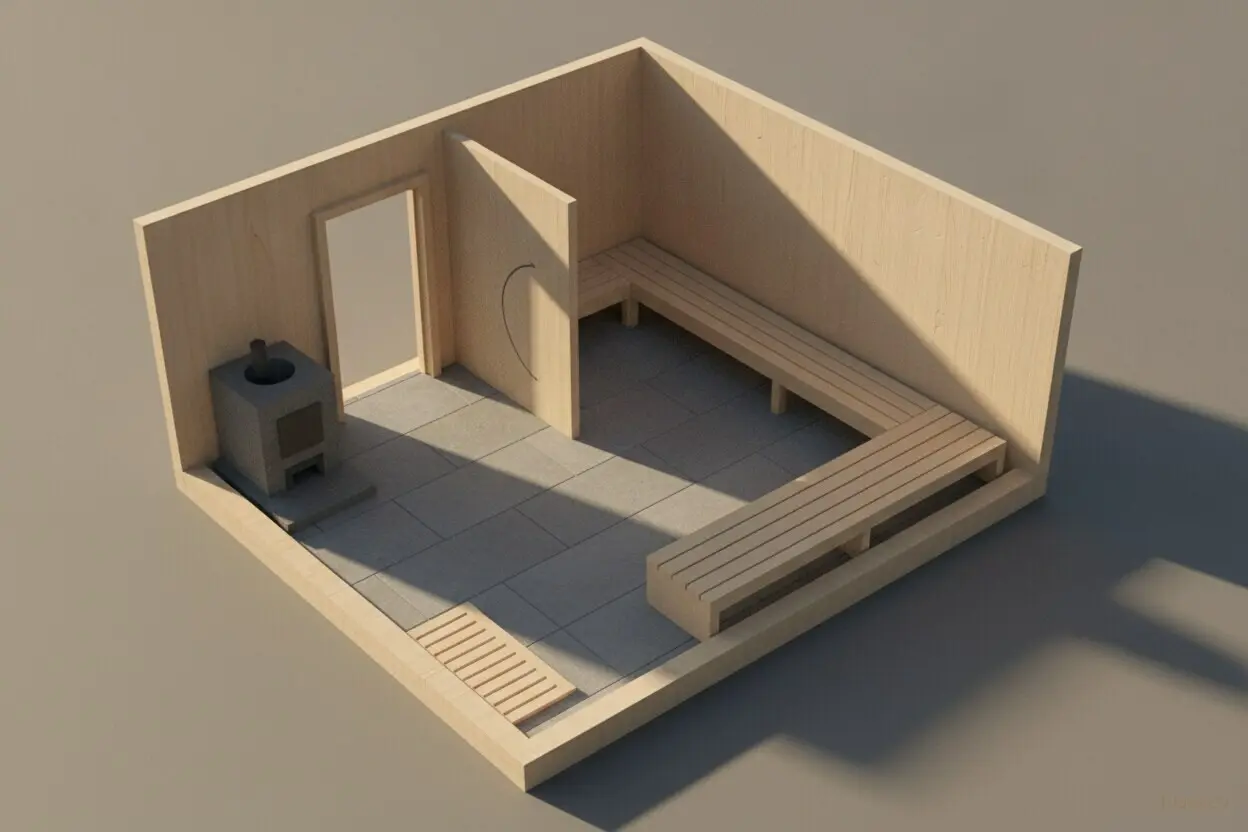
If you are effectively buying skill you do not have, a factory kit often ends up as the cheaper finished cabin rather than the more expensive one. The saving in a self-build sits in materials and labour, both modest on a small building. The risk sits in the detailing, which is exactly where a kit spends its money. Cabin sizes and layouts in our projects portfolio are a useful reality check on how much room benches and a stove really need before you commit to a footprint.
Questions worth settling early
Can I use reclaimed timber inside the hot room?
Use it for framing, external cladding or a bench substructure, not for the lining or the bench tops. Old stock may carry paint, glue or preservative you cannot identify, and resinous species are unpleasant against skin at bathing temperatures. Reclaimed material also needs to be dry and stable before it goes into a space that swings between hot and cold.
Does a sauna kit still need trades on site?
Almost always, yes, for the base and the services. The ground support has to suit the cabin weight and the plot, the electrical connection is regulated work and what counts as a certified connection is set nationally, and a wood-burner brings flue and chimney requirements that are inspected locally. Line those three up before delivery, not after.
How should I compare assembly time between the two routes?
Compare a stated figure against your own availability. A supplier can name the assembly sequence and the crew it assumes, because the cabin has been put together before, subject to the base being ready and the site accessible. A self-build schedule has no such figure. It is set by how many usable evenings and weekends you really have, and by how long each order takes to arrive.