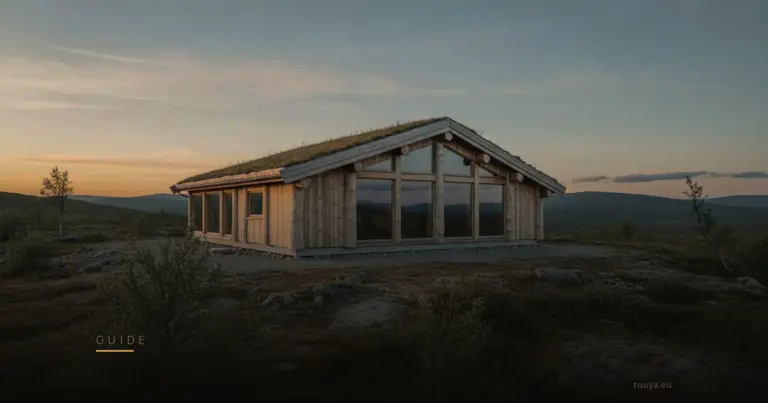
Cracks in Solid Timber Are Usually Drying, Not Failure

In short: Most cracks in solid timber are surface checking, the visible result of wood shrinking as it dries, and that is normal behaviour for the material. Whether a particular crack matters structurally depends on its size, its position and how the member is loaded. The cracks worth attention are the ones that run across the grain, sit at a connection or a bearing, or keep opening season after season without ever recovering.
The worry usually starts in the first winter, a few weeks after the heating has been on properly. A line has appeared along a wall panel, or along the underside of an exposed beam, following the grain and long enough to photograph. By the time anyone rings, the owner has looked at it every evening for a week and it has become the only thing in the room.
Nothing has moved. The wood has given up moisture to an indoor climate drier than anything it met in the storage yard, and it has relieved the resulting stress the only way wood can.
Why does solid timber crack as it dries?
Solid timber cracks because it shrinks unevenly: a good deal around the growth rings, less along the radius, and very little along the grain. A thick section loses moisture from its surface first, so the outer zone tries to get smaller while the wetter core still holds its original size.
Wood is strong along the grain and weak across it. The outer fibres end up in tension across the grain, the weakest direction available, and the stress releases as a split that runs lengthwise, usually pointing inwards towards the centre of the section. That split is a check.
Timber leaves a workshop at a moisture content suited to construction, then spends its first heated winter in air that is drier again. A second, smaller round of shrinkage happens over the first year or two of occupation and then settles into an annual rhythm. Because solid timber houses put large sections of wood directly into the room, that rhythm is on show rather than hidden behind a lining.
A check that widens through February and closes a little in a humid August is behaving exactly as drying wood behaves. The same moisture exchange that produces it is the moisture buffering people like about exposed wood; the check is the visible cost of it.
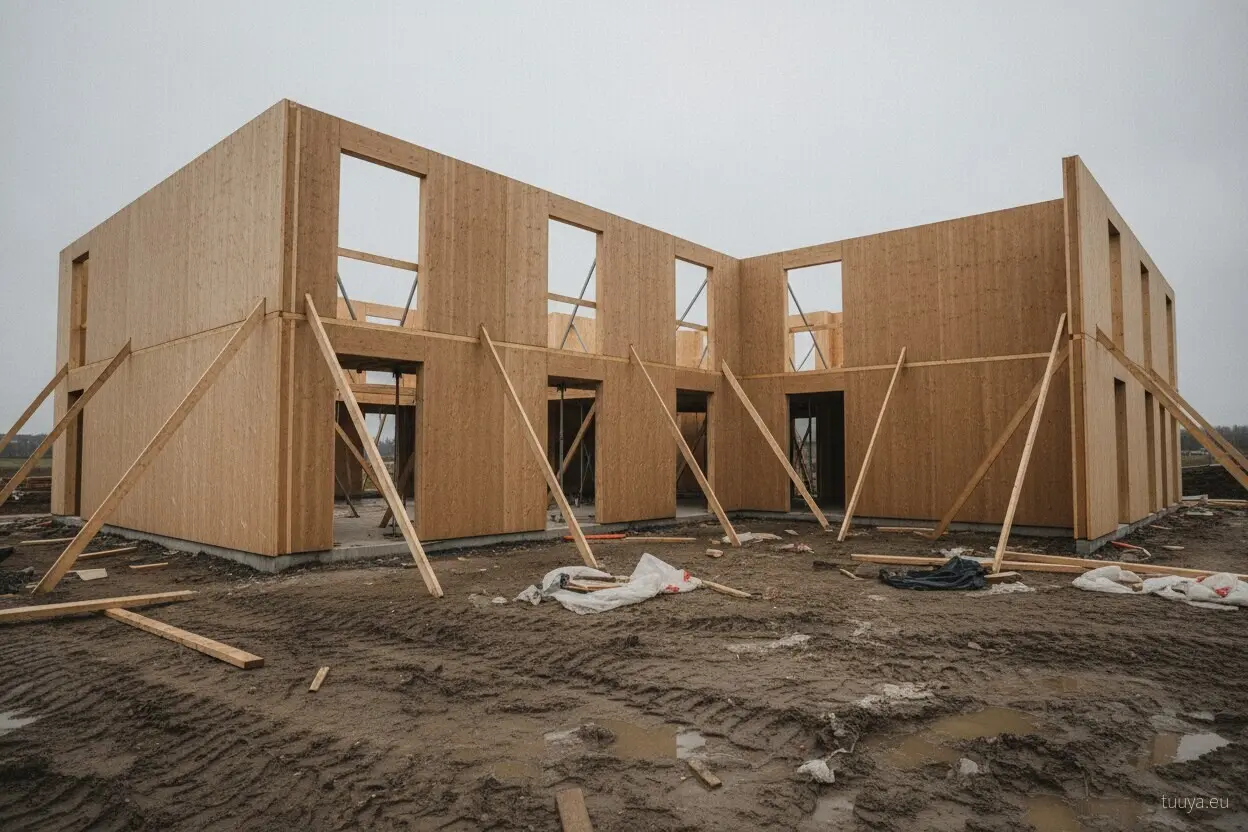
What tells surface checking apart from a structural crack?
Start with direction, position and behaviour over time. Depth is what owners measure first, but a depth reading means little until it is set against the size of the member, the way it is loaded and where its connections are.
| What to look at | Typical of a drying check | Reason to look closer |
|---|---|---|
| Direction | Follows the grain, straight or spiralling gently with it | Crosses the grain, or runs diagonally through it |
| Position on the member | Mid-face, mid-span, well away from connections | At a bearing, a notch, a bolt group or a steel plate |
| Behaviour over a year | Wider in the heating season, partly closed in humid weather | Grows in one direction only and never recovers |
| What comes with it | Nothing else in the room has changed | Visible sag, a door starting to bind, a joint opening, a new sound under load |
| On a laminated member | Short checks inside individual lamellas | Separation following one glue line over a long stretch |
A split that follows the grain does not sever the fibres at the top and bottom of a bending member, which is where most of the bending capacity sits. Lengthwise splitting counts for more near a support, where a beam has to resist shear, and inside the zone around bolts or dowels, where the connection relies on wood holding together across the grain. Both are matters for calculation on the actual member, not for judgement by eye.
Laminated members tell a version of the same story. Short checks within single lamellas are ordinary on visible beams, and anyone designing a room around exposed laminated timber should expect them as part of the material's appearance; a separation that tracks one glue line across a long stretch is a different observation and belongs with the supplier who produced the member. A crack beside a glue line is not automatically delamination: wood can check right next to a sound bond, and it takes an inspection of the member to tell the two apart.
A split running with the grain in the middle of a member is what drying looks like. A crack that crosses the grain, or sits at a bearing, a notch or a fastener group, is a question for the engineer who sized that member.
What should you monitor, and when do you call a professional?
Monitor the same crack at the same time of year and write things down. A pencil tick at each end with the date beside it, plus one dated photograph with a tape measure in frame, turns a worry into information that someone can actually read later.
Over two heating seasons a house settles into its own climate, and the pattern becomes obvious. Checks that appear, breathe with the seasons and then stop changing have run their course, at least until conditions change. What matters is not the width you measured once in winter but whether the same crack is longer, more continuous or wider than it was at the same point last year.
The observations that justify a phone call
Some findings should not wait for a second season. Ask for an assessment by a structural engineer, or by the supplier who produced the member, if you see any of the following:
- A crack crossing the grain in any loaded member, at any width.
- Any crack at a support, at a notch or cut-out, or passing through the timber around bolts, dowels or a metal plate.
- A split in a member that is wet, has been wet, or sits where rain can reach an end-grain surface such as an exposed beam end or an eaves detail.
- Cracking together with movement you can see elsewhere: a sagging ridge, a floor that has changed slope, a door or window that has begun to bind.
- A split in an external wall that you can see daylight through.
If cracking comes with sudden movement, a marked sag or a joint visibly opening, treat it as urgent: keep people out from under that part of the building and get a structural engineer in before anyone reaches for filler.
Daylight through a wall is worth separating from the fear behind it. A shallow check on the inner face of a solid wall is not by itself a path through the assembly; the airtightness layer, the panel joints and the junctions are what decide that, and they are also the bands of the assembly that really lose the heat in January. If you can see light, that points to a joint or a penetration, and it is worth resolving before linings and finishes close over it.
The practical problem with filling is timing: material pressed into a wide check in February can be squeezed out or left standing proud when the timber takes moisture back up in summer. Where a check has been judged cosmetic but is still unwelcome, sanding the edges smooth and leaving the geometry alone ages better than a filled line that reopens beside the filler.
Questions that come up before ordering
Will checking show on the visible inside face of the walls?
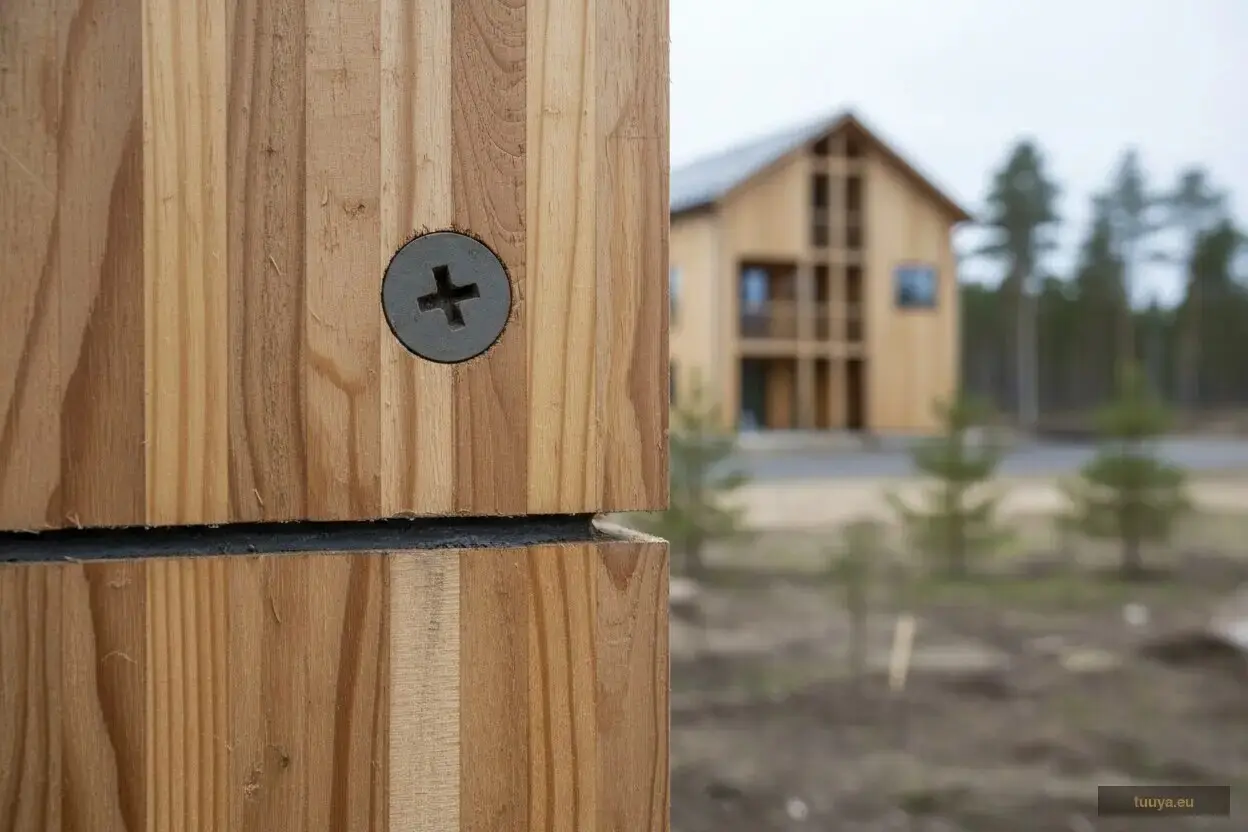
On exposed solid timber, yes, to some degree. Surfaces that stay visible are normally specified to a visual quality that sets what is acceptable in terms of knots, colour and checking, so the step to take before ordering is to agree that specification in writing and, better still, to look at finished surfaces in person. Painted or plastered finishes change the picture, because a lining over the wood does not stop the timber moving, it decides what you see.
Does checking look different in MHM and CLT walls?
Both are built from many smaller boards rather than from one huge section, so checking tends to appear as short lines within individual boards rather than as one long split across the whole wall. Where the boards are bonded, layers restrain each other differently from where they are joined mechanically, which changes the pattern more than the principle. In either case, the timber keeps responding to the indoor climate, more slowly behind a lining or a coating than on an exposed face.
Will a wood stove or underfloor heating make checking worse?
Anything that dries the indoor air in winter pushes timber towards a lower moisture content, and drier wood shrinks more. A stove that runs hard in a small room is the sharpest version of this, and timber close to it moves most. Steady heating and reasonable winter humidity give slower, smaller movement than a house that swings between cold and hot every weekend.
Should I ask for a cracked beam to be replaced?
Not on appearance alone, and not before someone has looked at where the crack sits in relation to the supports and the connections. Ask instead for a written assessment against the design of that member: the answer is either that the check is within what the material and the design allow, or that a repair or replacement is needed, and both answers should be documented. A supplier who refers the question to an independent structural engineer has answered it properly too.
Can I expect checking to stop at some point?
The heavy part of it does settle, typically within the first couple of years in the building, after which the timber follows the seasons instead of losing moisture steadily. New checks can still appear after a change in how the house is used, a much colder winter or a long spell with the heating off. A recorded, dated set of photographs from the first two years is what lets you tell a new crack from one you simply had not noticed.