Mass Timber Sustainability Depends on Forest and Lifespan
In short: Mass timber sustainability is real, but it is conditional. Wood stores carbon and takes less energy to manufacture than concrete or steel, yet that only counts for the climate if the forest is replanted and the building stands for generations.
Ask whether to build in mass timber, concrete or steel, and the sustainability answer usually arrives as a slogan: wood is the green choice. The honest version is more useful. Mass timber does carry a genuine carbon advantage, but that advantage lives or dies on conditions that have nothing to do with the panel itself. We build in timber, so we have a stake in the answer. That is exactly why the places where the advantage shrinks are worth stating out loud. The case for solid timber homes is strong. It is not automatic, and there are jobs where the heavier material is still the right call.
Carbon storage versus embodied carbon
Wood arrives with carbon already stored inside it. Concrete and steel arrive with a carbon debt. As a tree grows it pulls carbon dioxide out of the air and locks the carbon into its fibres, and when that timber becomes a wall or a beam, the carbon stays put for as long as the wood remains part of a building.
The heavy materials work the other way. Making cement drives carbon dioxide out of limestone as a chemical reaction, and smelting steel demands very high temperatures from energy-hungry furnaces. Both begin their life having already released a large amount of carbon before the first component reaches the site. That upfront figure is what builders mean by embodied carbon.
Timber processing is not free of energy either. Sawing, drying and pressing panels all draw power, and glued products use adhesives that carry their own footprint. The balance still favours wood, because the manufacturing energy is lower and the stored carbon offsets much of what is spent turning a log into a panel.
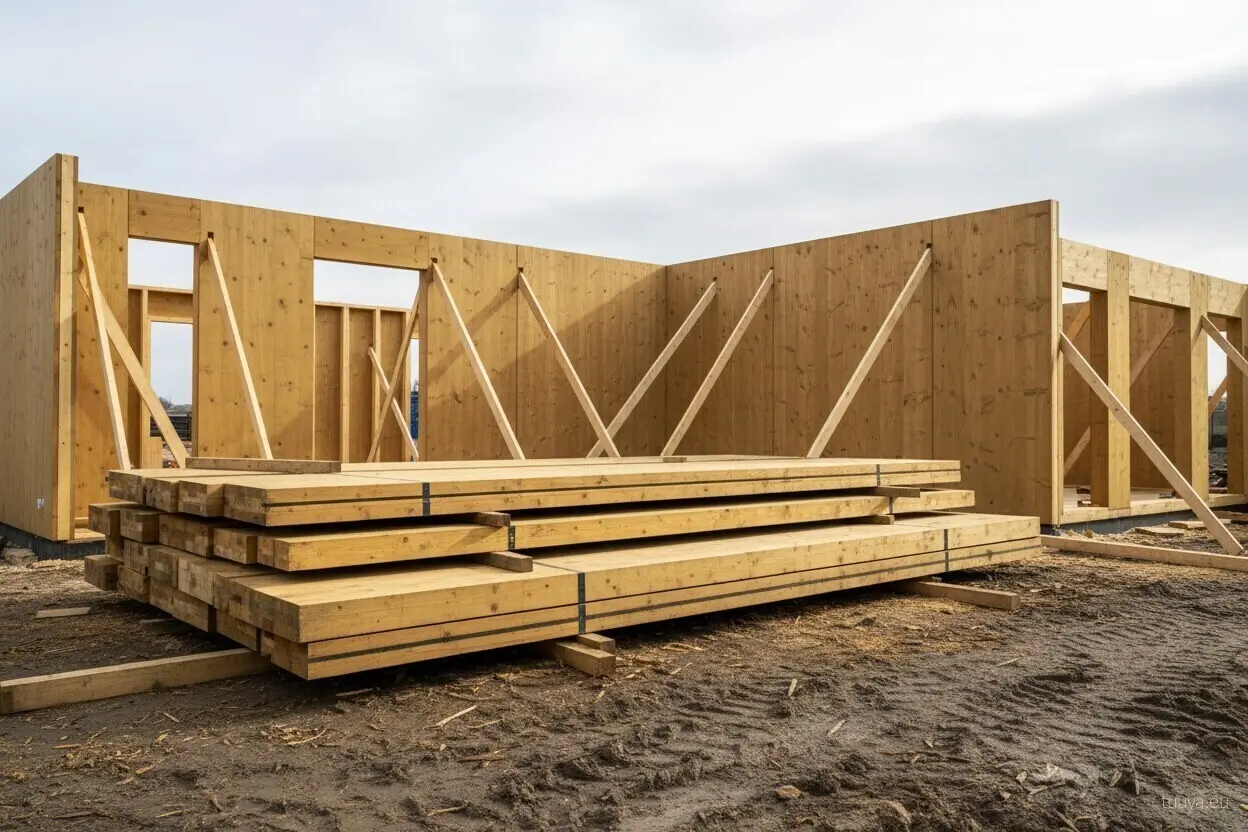
Set the three materials side by side and the pattern is consistent, even without inventing figures for it.
| Dimension | Mass timber | Concrete | Steel |
|---|---|---|---|
| Manufacturing energy | Lower | High | Very high |
| Carbon stored in the material | Yes, held while it stays in the building | None to speak of | None to speak of |
| Depends on how it is sourced | Strongly, on the forest | Weakly | On recycled content |
| End of life | Reuse, then burn or decay releases carbon | Crushed for aggregate | Highly recyclable |
Where the wood comes from decides whether mass timber sustainability holds
The carbon story is only true if the forest that supplied the wood is regrowing. Fell a tree, plant another, let the young forest mature, and it keeps absorbing carbon while the old wood sits safely inside your walls. That cycle is the whole basis of the claim.
Break the cycle and the argument collapses. Timber taken from a forest that is cleared and not replanted, or from old-growth land converted to another use, does not carry the same benefit, because nothing is left growing to reabsorb what the cut released. Responsibly managed, replanted forestry is the single condition that makes mass timber sustainability real rather than rhetorical.
For a buyer, the practical move is to ask about provenance. Certification schemes such as FSC and PEFC exist to trace timber back to forests managed for renewal, and asking where the wood is grown and how the land is replanted is a fair question to put to any supplier. Transport distance counts too, though it tends to move the total far less than the forestry itself.
How long the building lasts
The longer a mass timber building stands, the longer its stored carbon stays out of the atmosphere. Durability is a climate feature here, not only a comfort feature. A house that serves a family for a century keeps its carbon locked away and pushes any end-of-life release far into the future. A building that fails early gives that carbon back sooner and wastes the manufacturing energy spent on it.
Longevity in solid timber comes down to keeping the wood dry and stable. Engineered panels help, because much of the movement and settlement that troubles stacked-log construction is resolved before the material leaves the factory, which is part of what building science changed about solid wood walls. A well-detailed roof, controlled moisture and protected timber are what let the structure reach the age its carbon case assumes.
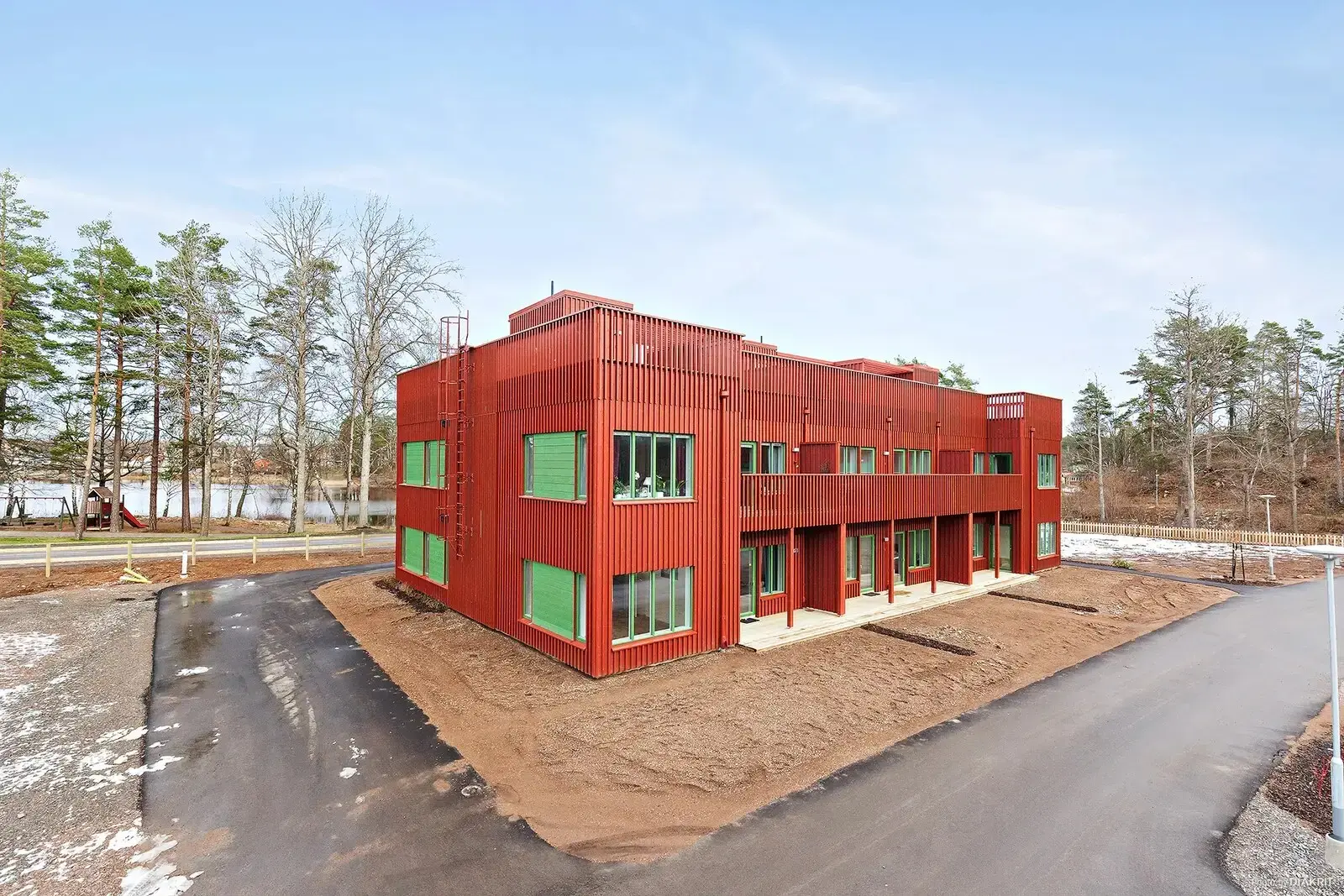
End of life is the last piece. When a building finally comes down, timber can often be reused or repurposed, which stretches the storage further. If it is eventually burned or left to decay, the carbon returns. By then a replanted forest has been absorbing carbon for decades, and the balance still holds if the earlier conditions were met.
When concrete or steel is the right call
Concrete and steel are the right choice where timber does not belong, and pretending otherwise helps no one. Foundations sit in wet ground and carry the whole load of the house. That is concrete's job. No serious timber build avoids concrete entirely at its base.
Steel earns its place where the span or the point load runs past what a timber member can reasonably do. For the openings and spans a family house actually needs, engineered wood competes well, and the trade-offs are laid out in this look at where wood wins the span against steel. Beyond that range, or in structures with heavy industrial loading, steel is simply the correct tool.
There is an honest efficiency point too. A poorly built timber house that leaks heat and fails early is worse for the climate than a durable, well-insulated building in another material. Material choice is a strong lever. It does not override bad detailing. If the budget or the plot pushes the timber option toward a compromised, short-lived result, the greener decision may be a smaller, better-built house, in whatever material lets it last.
The verdict
Mass timber deserves its reputation, with the conditions attached. Its carbon advantage over concrete and steel is real, and it rests on sound physics: less energy to make, and carbon held in the fabric rather than emitted before delivery. That advantage is not a property of the plank on its own. It depends on a forest that is replanted and a building designed and detailed to last.
Treat those two conditions as part of the specification, not as slogans, and mass timber is one of the most credible low-carbon ways to build a house today. If you want to weigh it against a real plot and a real budget, the door is open on our contact page.
Frequently asked questions
Does building in mass timber cause deforestation?
Not when the wood comes from responsibly managed forests that are replanted after harvest. The concern is real only for timber taken from land that is cleared and not renewed, which is why provenance and certification matter more than the panel itself.
Is the stored carbon released if the building burns or is demolished?
Some of it eventually returns if the timber is burned or left to decay at the end of the building's life. The whole point is timing. The carbon stays stored for the entire service life of the house, and in the meantime a replanted forest keeps absorbing more.
Do glues and treatments cancel out the low-carbon benefit?
Adhesives and preservatives carry their own footprint, so they narrow the margin rather than erase it. The balance still favours mass timber over concrete and steel, because the stored carbon and the lower manufacturing energy outweigh the smaller contribution from the glue lines.