Glulam vs steel in a house: where wood wins the span
Glulam vs steel in one line: for the spans a family house actually needs, glulam (glued laminated timber) does the job steel does, while staying warm to the touch, kind to the foundation and attractive enough to leave exposed. Steel still wins where sections must be minimal or spans extreme. The interesting question is not which material is stronger; it is which one makes the house better to live in.
Open-plan kitchens, glazed gables, carports, roofs that fly past the wall line: all of it hangs on beams. The reflex in much of Europe is still a steel I-beam boxed in plasterboard. In a timber house that reflex deserves a challenge.
What glulam is
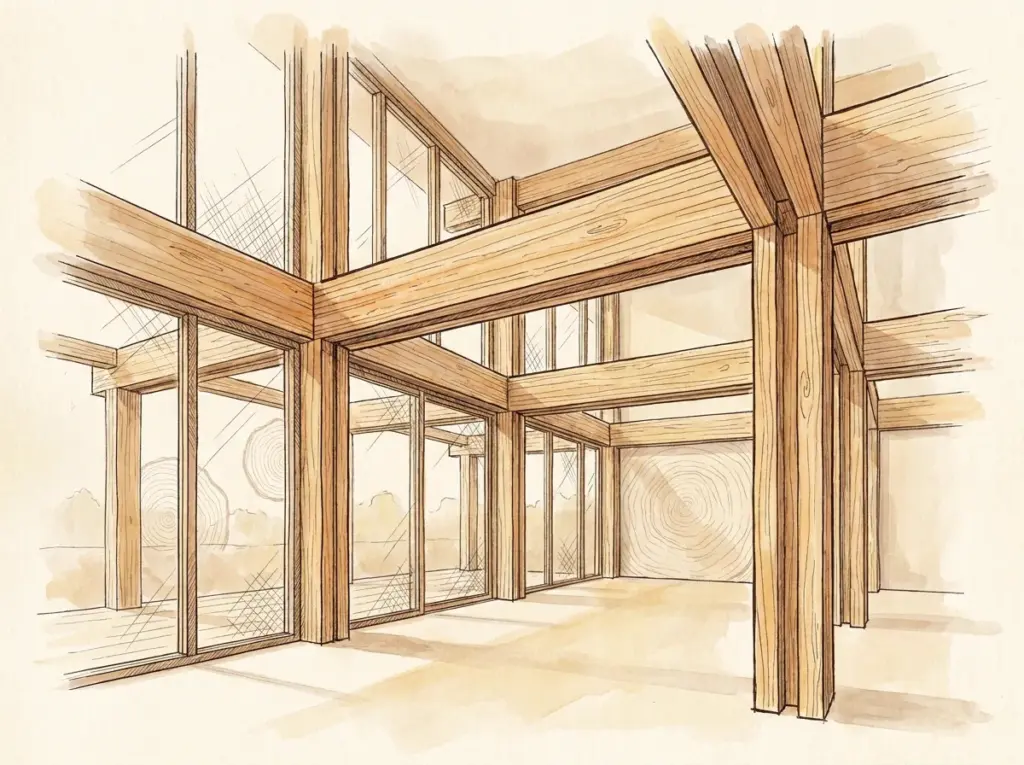
Glulam is dried timber lamellas glued into one engineered section: beams, columns and curved members sized to the load. Because the lamellas are graded and finger-jointed and their defects dispersed, a glulam beam is stronger and far more predictable than the same size of sawn timber, most often supplied in the GL24h strength class. It can also be produced in lengths and shapes a sawmill cannot cut. It is the long-span member of the engineered timber family, and it is how we frame the parts of a house that massive walls alone cannot reach. You can see where it fits in our glulam structures range.
Where glulam beats steel in a house
The table is the quick read; the reasoning follows.
| What you are comparing | Glulam | Steel |
|---|---|---|
| Weight for the same house span | Far lighter; less load into walls and footings | Heavy; needs bigger supports and lifting |
| Thermal behaviour | Low conductivity, no cold bridge to wrap | Conducts heat; wants a thermal break in the envelope |
| Fire design | Chars about 0.65 to 0.7 mm a minute, keeps load, sized to R30 or R60 | Loses strength fast when hot; normally clad |
| Exposed finish | Structure and ceiling in one | Usually boxed in plasterboard |
| Extreme spans, minimal section | Needs a deeper section | Wins; slimmer and longer |
| Moisture | Must be kept dry at the connections | Less sensitive structurally, but needs rust protection |
| Installed cost | Lighter, fewer trades on site | Crane, welding, cladding, fire protection |
Weight per span. For the spans a house actually asks for, glulam delivers the performance at a fraction of the weight of the steel section doing the same job. Lighter members mean easier lifting, simpler connections and less load pushed into walls and foundations.
No cold bridge to wrap. Steel conducts heat brilliantly, which is exactly what you do not want passing through an insulated envelope. A steel beam in the thermal layer is a cold bridge that has to be wrapped and carefully detailed. Timber conducts far less heat, so the beam is far less of a weak point in that line. It still wants airtightness and moisture detailing like any structure; it just does not need a steel beam's thermal-break gymnastics.
Fire behaviour you can calculate. Unprotected steel loses strength quickly in a fire and is normally clad or coated with intumescent paint for that reason. Thick timber chars at a predictable rate, the 0.65 to 0.7 millimetres a minute that Eurocode 5 sets for softwood glulam, and keeps carrying load while the char shields the core. That is why exposed glulam is accepted in European fire design (Eurocode 5), sized for a required rating such as R30 or R60, not treated as a romantic exception.
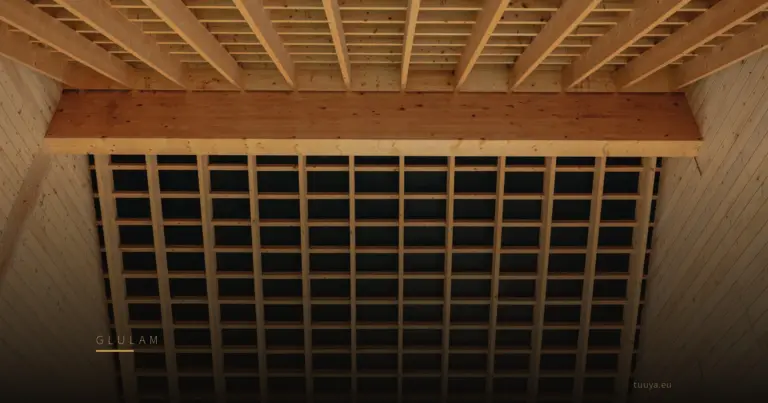
It is the finish. A glulam beam is structure and ceiling in one. No boxing, no plasterboard, no painter. In our houses the frame is often the best-looking thing in the room, and clients stop hiding it.
And the carbon column: steel is energy-intensive to make, while wood stores biogenic carbon for as long as it stays in the building. That credit is real, but it depends on where the timber came from and how long the building stands, not on the material by itself. If the embodied footprint of your build matters to you, the beam is still one of the easiest places to act.
The cases steel still owns
Fair is fair. Steel takes the point where the section must disappear: a slim flitch hidden in a floor zone, a transfer beam under brutal point loads, spans and cantilevers at the edge of what residential engineering asks for. Steel is also less moisture-sensitive structurally than timber, though it pays that back in corrosion protection, because a steel beam in a damp zone still has to be coated and detailed against rust. If your architect needs a 12-metre clear opening in a 240-millimetre structural zone, steel is probably the right answer, and forcing wood into that opening helps nobody.
In a typical house, though, those cases are the exceptions. The everyday spans, the ridge beam, the open kitchen, the terrace roof, sit comfortably inside what glulam does best.
Glulam vs steel on cost, answered like an engineer
Per beam, prices move with the steel market and the timber market, and since 2022 the steel side has been the more volatile of the two. The gap is rarely dramatic on the beam alone. The truer comparison is installed cost: steel arrives heavy. It often needs a crane, welded or bolted connections, then cladding or intumescent coating before anyone calls it finished. Glulam arrives lighter, goes up with timber connectors, and is already the ceiling. We price structures as part of the whole house, individually, because a beam quote without its connections and finishes is marketing, not budgeting.
How it plays with massive walls
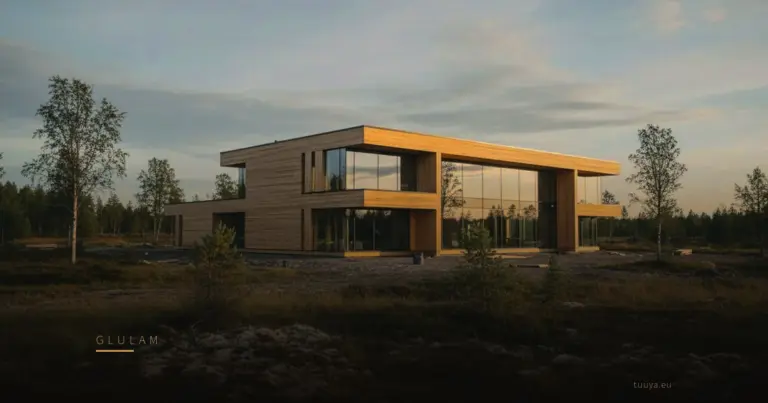
Glulam is not a rival to our MHM solid timber walls; it is their long-armed partner. The wall system carries the house, and glulam takes over where the design opens up: ridge lines, wide living rooms, carports and covered terraces. One material logic from foundation to ridge, which is rather the point of building in wood at all.
Questions from the drawing board
Are glulam beams stronger than steel?
Kilogram for kilogram, glulam competes surprisingly well; section for section, steel is stronger and stiffer. In a house the glulam vs steel question is usually academic: both can carry your span, so the decision falls to thermal behaviour, fire detailing, weight and looks.
What are the disadvantages of glulam?
It needs bigger sections than steel for the same job, its connections must stay dry, and long curved members need transport planning. All three are design problems, settled at the drawing board.
Is glulam cheaper than steel?
Sometimes on the beam, more often on the installed result, once the crane, fireproofing and cladding of steel are counted. Ask for the installed comparison, not the price per metre.
Put a span to it
If a drawing on your table has a long opening and a question mark, send it over. We will tell you straight whether it is a glulam job or a steel one, and cost it as part of a real house rather than an isolated beam price. Send it through the project form with the span and the loads you already know, and we will come back with a straight answer and a place for the beam in the whole house.