MHM vs CLT vs timber frame: choosing the right wall
In short: MHM vs CLT vs timber frame is a choice between three different walls. A timber frame is a light skeleton filled with insulation. CLT is a solid engineered panel, glued in cross layers. MHM (Massiv-Holz-Mauer) is also a solid cross-layered wall, but it is fixed mechanically, without glue, so the panel itself stays vapour-open. If you want a massive, vapour-permeable wall for a year-round home, MHM is the one to study first.
People searching for a "CLT house" usually want the feeling of solid wood: quiet rooms, stable temperature, walls that are the structure rather than a hollow sandwich. What most of them have never been told is that CLT has a glue-free sibling. The comparison below is the one we walk every client through.
What each wall actually is
A timber frame is a stud skeleton, typically 45 by 145 millimetres or similar, with insulation between the studs and boards on both faces. The wood carries the load, the insulation holds the warmth, and membranes handle the airtightness. It is light, quick and usually the lowest-cost of the three. Nearly every manufacturer in Europe builds it roughly the same way, which is why it rarely feels like a distinctive material choice.
CLT (cross-laminated timber) is a solid panel of boards stacked in crossing layers and glued under press. It is a superb structural material: dimensionally stable, strong enough for multi-storey buildings, precise to the millimetre. The glue is the point, and also the compromise. Cross-lamination and the adhesive make the panel far more dimensionally stable, but it no longer breathes the way plain timber does.
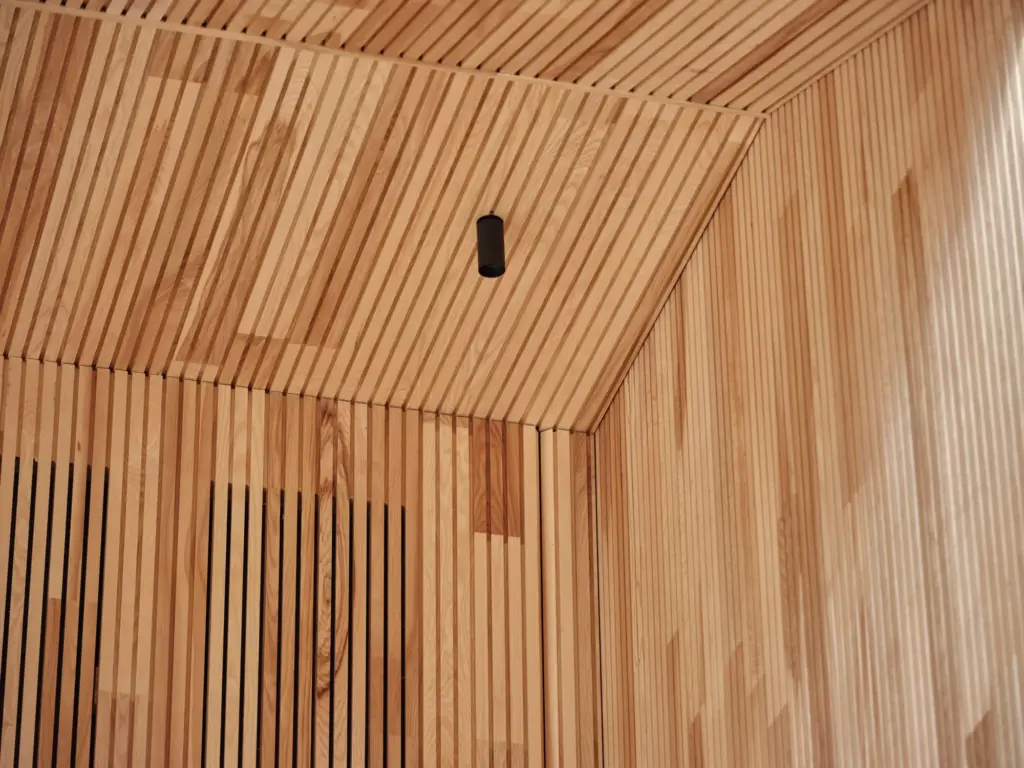
MHM (Massiv-Holz-Mauer) takes the same cross-layered idea and removes the glue. Layers of dried softwood boards are pressed into one solid wall element and fixed mechanically. No adhesive in the wall and no plastic foils in the panel, just wood. Detailed correctly, the wall stays vapour-open, so moisture can move through the assembly rather than being trapped in it. More than 7,000 houses have been built with the system since 2002, according to its German licensor, yet in English almost nobody explains it. We build with it, so we will.
MHM vs CLT vs timber frame: the comparison that matters
| Timber frame | CLT | MHM | |
|---|---|---|---|
| Wall type | Hollow, insulated skeleton | Solid glued panel | Solid glue-free panel |
| Glue in the wall | Little to none | Yes, structural adhesive | No |
| Vapour behaviour | Depends on membranes | Less permeable than MHM | Vapour-permeable, breathing |
| Thermal mass | Low | High | High |
| Feel of the rooms | Light, drywall-like | Solid, quiet | Solid, quiet, all wood |
| Typical cost position | Lowest | Higher than frame | Higher than frame |
On paper, MHM vs CLT is a close call. In practice the glue question decides it for a lot of families: if what draws you to wood is the indoor climate, a panel with no adhesive and no foils in it is the cleaner answer. And vapour-permeable is not the same as draughty. The wall still gets an airtight layer, so you get the breathing wall and the airtightness, not one at the cost of the other. Our MHM walls come in thicknesses from 100 to 345 millimetres, so the wall itself can be sized to the climate it will live in, though the energy target, not the wall alone, sets the final build-up.
Where each wall earns its place
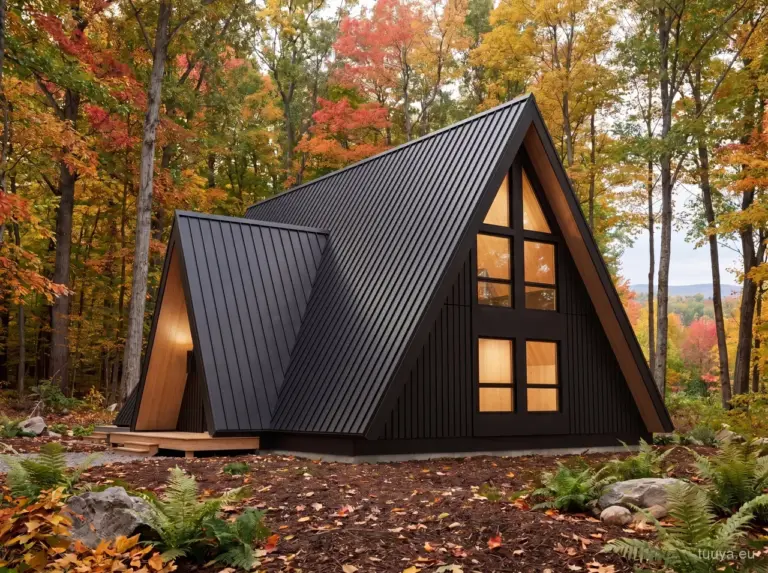
A timber frame wins on budget and speed. For a small weekend cabin, a garden office or a rental unit, a well-built frame is enough; the massive wall earns its keep on a year-round home you plan to hand down. Frame construction is also how we build our A-frame house kits, because an A-frame is a roof-shaped structure where a massive wall makes little sense.
CLT wins in engineering-heavy projects: tall buildings, big cantilevers, tight tolerances on large spans. If your architect is drawing a four-storey structure, CLT belongs on the table.
MHM wins the family house. Load-bearing solid walls, high thermal mass that evens out summer heat and winter cold, and no glue anywhere in the panel. It also repairs like wood, because it is only wood. It is the wall behind our MHM solid timber houses, and the one we reach for first on a home meant to last.
The combination is real, too. Massive walls cost more than frame, so on a two-storey house we often put MHM or CLT on the ground floor, where you live most of the day, and a frame structure above. You keep the solid-wood climate where it matters and take the saving where it does not.
Proof, not promises
The system we sell is the same MHM behind the private house in Pirita, Tallinn, built by our manufacturing partner EstHus: 252.8 square metres of glue-free walls, clay plaster inside, wood-fibre insulation, named Best Private House at Estonia's Prefab House of the Year 2023. Awards do not build houses, but an independent jury looked at a glue-free solid wall and found nothing to argue with.
Common questions
What is the alternative to CLT?
MHM is the closest alternative: the same cross-layered solid wall, fixed mechanically instead of glued. It trades some of CLT's engineering headroom for a glue-free, vapour-permeable wall.
Is MHM cheaper than CLT?
They sit in the same band, above timber frame. The answer depends on the design, the spans and the factory's distance from your site, so we price each project individually.
Can you mix MHM with timber frame?
Yes, and we often do: solid ground floor, frame upper floor. It keeps the budget in check without giving up the massive-wall feel where you spend your time.
How long does a solid timber wall last?
Kept dry at the details, solid wood walls are built for generations; timber buildings centuries old are still standing across Europe. We back our materials with a 5 to 10 year guarantee, and the wall itself is designed to outlive the paperwork.
Talk it through with numbers
If you are weighing these three walls for a real plot, do not decide from a table. Give us the site, the size and the winters you build in, and we answer with a real specification and a real price. Start in the configurator, or talk to our project manager: one person, from first call to keys.